 Il Circolo del Forno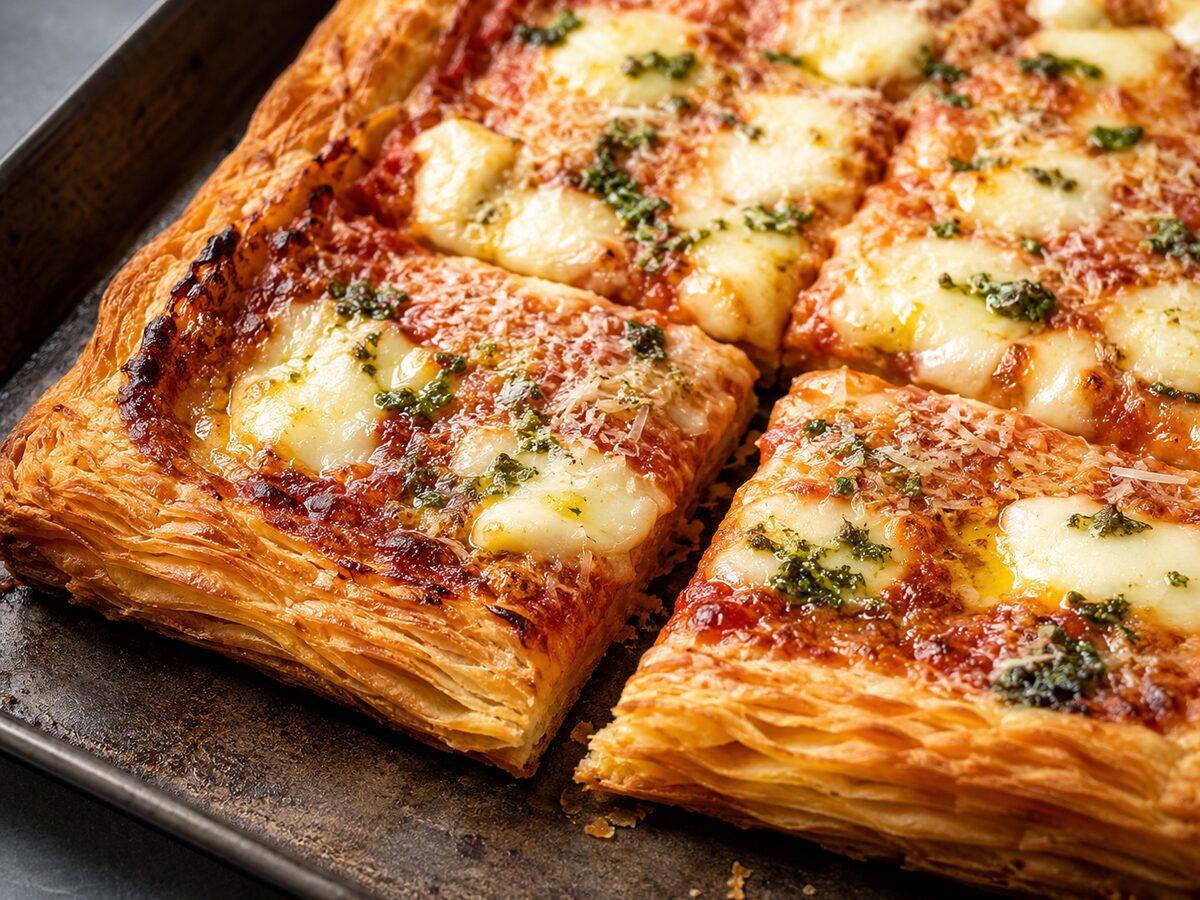
Flaky Puff Crust Pizza was chosen by King Arthur Baking Company as their "Recipe of the Year 2026." It's a sheet pan pizza like no other: instead of chasing big bubbles or long fermentation, it goes after a thin, buttery, layered, and seriously crispy crust.
The idea is simple: bring a pastry technique, lamination, into a homemade pizza recipe. The result looks and feels like a flaky pastry base: light when you bite into it, crisp at the edges, and richer than your average sheet pan pizza.
Why this pizza is worth making
The difference is the butter, but just adding it to the dough isn't enough. It has to be grated, frozen, and distributed between layers of dough. That way, in the oven, the water in the butter turns to steam and separates the dough into distinct flaky layers.
If the butter warms up too much during the process, it melts and blends into the dough. At that point the layers are gone and the crust turns denser and chewier. That's why there's one main rule: work fast and keep the fat cold.
At a glance
- Pizza style: Laminated sheet pan pizza with a flaky crust
- Key technique: Frozen butter and letter folds
- Pan size: About 13×18 inches (33×45 cm)
- Oven: 475°F (245°C)
- Total time: About 2 hours
- Result: Crispy, flaky, buttery, layered base
Ingredients
Quantities are for a standard baking pan of about 13×18 inches (33×45 cm).
Dough
| Ingredient | Amount |
|---|---|
| Cold butter | 4 tbsp (2 oz / 57 g) |
| Pizza flour or all-purpose flour | 2½ cups (10½ oz / 300 g) |
| Instant yeast | 2¼ teaspoons |
| Fine salt | 1½ teaspoons (8 g) |
| Granulated sugar | ½ teaspoon |
| Warm water (100–110°F / 37–43°C) | ¾ cup (6 oz / 170 g) |
| Extra-virgin olive oil | 1 tablespoon (12 g) |
Toppings
| Ingredient | Amount |
|---|---|
| Pizza sauce | ⅔ cup (5½ oz / 151 g) |
| Grated Parmesan | ¼ cup (1 oz / 25 g) |
| Shredded mozzarella | 2 cups (8 oz / 227 g) |
| Fresh mozzarella, diced | ½ cup (4 oz / 114 g) |
Garlic basil oil
- 3½ tablespoons (50 g) extra-virgin olive oil
- 2 tablespoons (10 g) chopped fresh basil
- lemon juice, ½ to 1 teaspoon
- ½ garlic clove, grated
- pinch of salt and red pepper flakes
Instructions
-
1
Prepare the butter
Grate the cold butter on the large holes of a box grater directly onto a sheet of parchment. Spread it into an even layer, cover, and freeze for at least 30 minutes. It needs to stay solid until lamination.
-
2
Make the dough
In a bowl, mix together flour, yeast, salt, and sugar. Add the warm water and oil, then work until no dry flour remains. Transfer to a floured surface and knead for 1 to 2 minutes, just until you get a smooth, even dough. Cover and let rise for 30 minutes at room temperature.
-
3
Do the first fold
Roll or pat the dough into a rectangle about 10×13 inches (25×33 cm). Scatter most of the frozen butter over the surface and press it in gently. Fold the left side to the center, then fold the right side over the top. That's the classic letter fold.
-
4
Do the second fold
Gently spread the rectangle back out, add the remaining butter, and repeat the fold, this time bringing the top edge to the center first, then folding the bottom edge over. Pinch the seam closed without pressing the sides flat.
-
5
Shape and pan
Stretch the dough to fit the pan. If it springs back, cover and let it rest for 15 minutes. Place it in an ungreased pan, coax it toward the edges, and rest another 15 minutes. Then finish the shaping and let rise 15 to 30 minutes, until the edges look puffy.
-
6
Top and bake
Preheat the oven to 475°F (245°C). Spread the sauce almost to the edges, then add Parmesan, shredded mozzarella, and fresh mozzarella. Bake for 15 to 17 minutes, until the cheese is melted and the bottom is deep golden brown.
-
7
Finish out of the oven
While the pizza bakes, mix together the oil, basil, garlic, lemon juice, salt, and pepper flakes. As soon as it comes out, transfer the pizza to a wire rack and let it rest for 3 to 5 minutes. Drizzle with the garlic oil and slice only after that short rest.
What are letter folds
Letter folds are a simple way to create layers. Think of the dough split into three parts: you bring one part to the center and fold the other over the top, just like folding a letter to put in an envelope.
In this recipe, the folds trap the frozen butter shards between multiple sheets of dough. In the oven, steam from the butter lifts those sheets and creates the flaky texture. Don't press too hard: the goal is to distribute the butter, not push it into the dough.
Extra toppings: yes, but keep it light
This pizza shouldn't be loaded the way a classic sheet pan is. The crust is the star, and too much moisture can ruin it. Stick to a few ingredients, well managed.
| Extra | Amount | Practical tip |
|---|---|---|
| Vegetables like peppers, mushrooms or onions | Up to about 3½ oz (100 g) | Cook them first and add on top of the cheeses, so they don't release water onto the base. |
| Spicy salami or pepperoni | About 2 oz (57 g) | Reduce the fresh mozzarella to 2 oz (57 g) and layer the meat on top of the cheeses. |
| Very wet ingredients | Better to avoid or use sparingly | They can soften the crust and cover the flaky texture. |
| Finishing oil | As needed | Add it after baking, not before. It adds fragrance without weighing down the base. |
The steps that really make the difference
- Keep the butter cold: if it softens, put everything back in the fridge for 10 to 15 minutes.
- Don't force the dough: if it springs back, let it rest and come back after a few minutes.
- Go easy on toppings: too much water or weight will flatten the layers.
- Pop large bubbles: halfway through baking, check the surface and pierce any big bubbles with the tip of a knife.
- Rest on a rack: leave the pizza on a wire rack for 3 to 5 minutes after baking to avoid condensation under the base.
- Use a dark pan if you can: it helps browning. With a light-colored pan, you can finish the crust by placing the pizza directly on the bottom oven rack with the oven turned off for a final 3 to 5 minutes.
How to reheat leftovers
The oven is still your best bet. Reheat slices at 350°F (175°C) for about 10 minutes, loosely wrapped in foil or placed on a rack. Skip the microwave: it adds moisture and makes the crust soft.
In short
Flaky Puff Crust Pizza works because it changes the starting point: instead of just chasing elasticity and air pockets, it works with layering. Frozen butter, letter folds, and a hot oven turn a simple sheet pan pizza into a flaky, crispy, very distinctive base.
It's a recipe for anyone who wants to try something different without professional equipment. It takes some attention to butter temperature, but it's not complicated: the secret is not rushing exactly when the dough needs to rest.
Editorial note: text reorganized in blog editorial format, with metric measurements and simplified technical notes.