 Il Circolo del Forno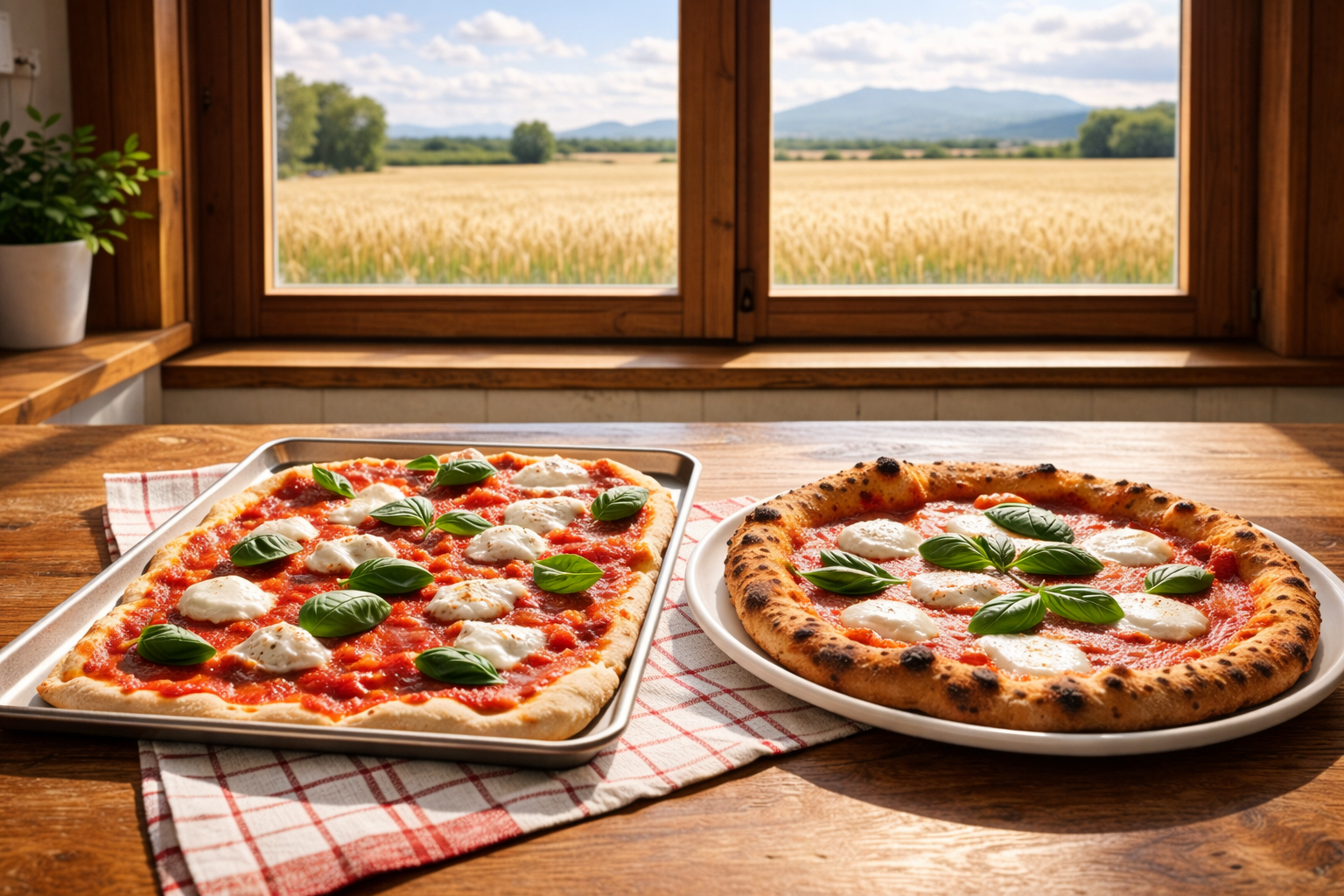
Good morning dear friends of flour and yeast, and welcome to our new weekly appointment dedicated to the white and fragrant world of homemade pizza. I hope you had a wonderful week and that you're eager to get your hands messy because today we will explore two different yet equally fascinating interpretations of round pizza together. We often wonder what the secret is to achieving that perfect result seen in the best pizzerias, but the truth is there are no magical secrets—just a good understanding of flour and a lot of passion for feeling the dough under your fingers. Today, we will dive into two opposite preparations that will satisfy all tastes in your family. On one side, we will prepare the classic Roman round pizza, affectionately called scrocchiarella due to that wonderful sound it makes when we bite into it, and on the other side, we will challenge ourselves with a high hydration version, which includes a lot of water that will give incredible lightness and softness, almost like a cloud of bread.
The Roman Scrocchiarella: Thin and Crunchy
Let's start from the heart of Roman tradition: the thin pizza that almost disappears under the toppings and provides that crunchy satisfaction with each bite. To make a true scrocchiarella, we need to think of a dough that is easy to roll out very thin, and that loses all its moisture during baking, becoming a fragrant, salty biscuit. Imagine being in your kitchen with a nice zero-type flour or perhaps a delicate mix. For this pizza, we don't need a huge amount of water; in fact, we should keep it quite low. If you take half a kilo of flour, I recommend adding about nine and three-tenths ounces (275g) of water. This means we are looking at a hydration of fifty-five percent. It seems low compared to what we will use later, but this dryness allows us to roll the dough with a rolling pin until it is almost transparent, without tearing or becoming rubbery after baking.
How to Knead and Roll Out the Scrocchiarella
As you begin to knead, you will feel that the dough is firm and compact. Add salt—about four-fifths of an ounce to nearly nine ounces (12 or 13g) for half a kilo of flour—and if you want to help with the rolling, you can add a splash of extra virgin olive oil. The oil acts as a lubricant between the strands of flour, making the dough more extensible. Think about when you try to put on a tight glove; if your hand is a bit damp or oily, it slips on more easily. That's what the oil does for your pizza. Once your dough is nice and smooth, let it rest. Resting is essential because the flour needs time to absorb the water and relax. If you try to roll it out immediately, the dough will spring back like a rubber band, and you will end up tiring yourself out unnecessarily. Shape...