 Il Circolo del Forno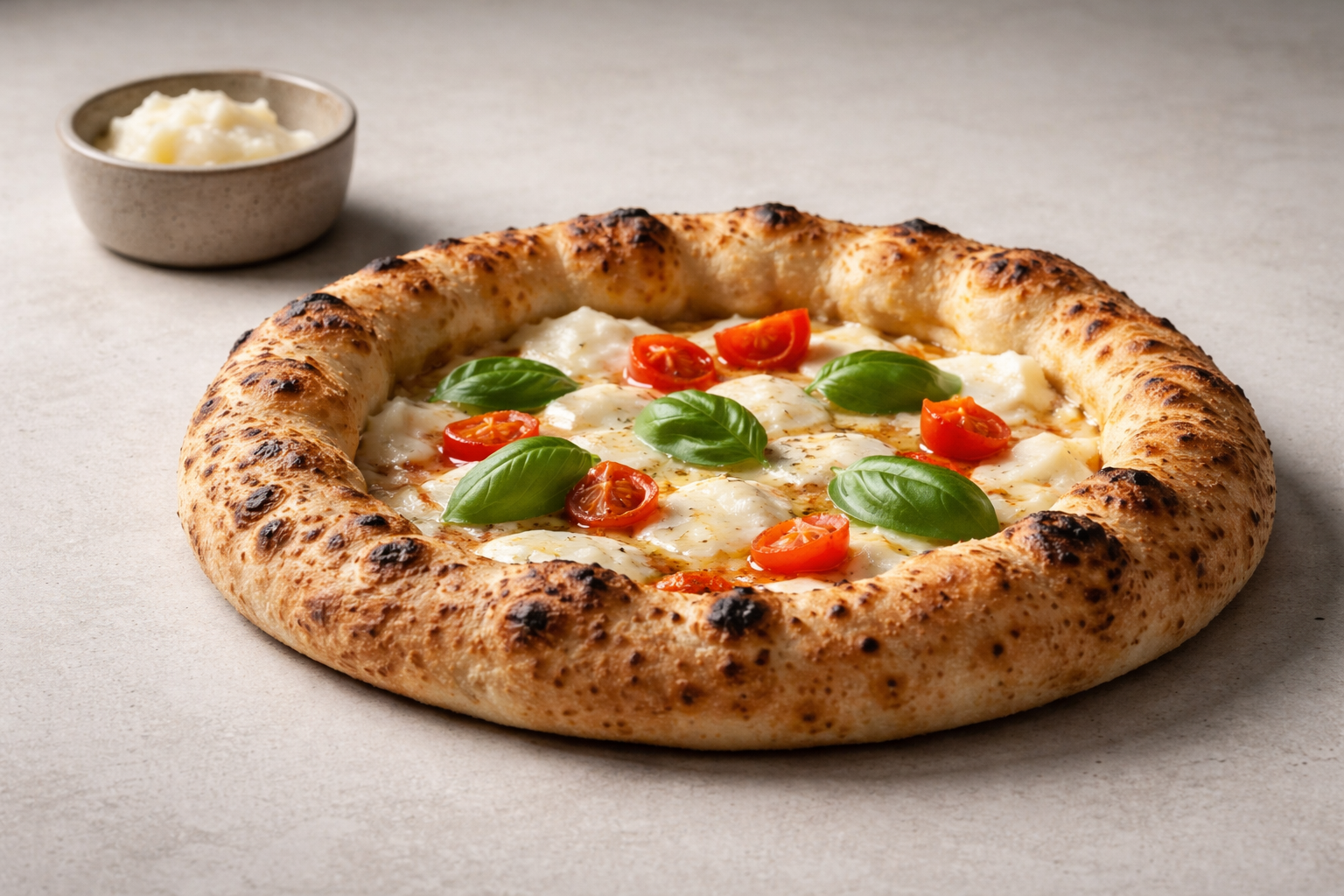
There’s an ingredient that a certain generation of pizzaioli knows well, that Neapolitan grandmothers never stopped using, and that the most attentive artisan labs are quietly putting back on the workbench. It’s called lard, and in 2026 it’s returned to the spotlight without asking permission.
For decades it was the great excluded. First a victim of the vegetable oil revolution in the Seventies, then of the collective fear of saturated fats, lard had become almost an awkward word in modern cooking. Yet those who kept using it—from Neapolitan fried pizza to crescia from the Marche, from Romagna pastry layers to tigelle—never doubted: with lard, the dough changes. For the better.
What lard does to pizza dough
Lard is a plastic fat, meaning it is solid at room temperature but able to distribute itself evenly within the gluten network during mixing. This has three direct and measurable technical effects. First: the gluten network becomes more extensible and less tenacious, so the dough ball stretches without springback, tearing, or stress. Second: during baking, lard progressively melts, creating micro steam pockets inside the cornicione, which becomes alveolated, light, almost puffed. Third: animal fat carries short-chain saturated fatty acids that contribute to the Maillard reaction, promoting a more pronounced and even browning, even at relatively low temperatures.
The result is a cornicione that puffs up evenly, with a thin, crisp crust on the outside and a tender, stringy interior crumb. Exactly what you look for, and what is harder to achieve consistently with extra virgin olive oil (EVO) alone.
How much is used?
In the oldest Neapolitan tradition, lard was present at percentages between 2% and 5% of the flour weight. It was the norm, not the exception. The very Neapolitan fried pizza, now rehabilitated on the gourmet menus of top restaurants, wouldn’t be what it is without lard in the dough and in the frying fat.
Craftsmanship, supply chain and 'clean label'
The return of lard in 2026 is not nostalgia. It’s gastronomic culture meeting a new consumer awareness. Artisanal lard, obtained from free-range pigs and processed cold, carries a one-ingredient label: pork fat. No additives, no emulsifiers, no industrial processes. Exactly the opposite of many vegetable margarines used in the bakery industry for decades.
The market confirms it: edible animal fats are registering unprecedented global growth, with Italy among the fastest-growing European markets. And in the most innovative labs, lard returns in blends with EVO oil, used as a technical precision element rather than a generic substitute.
The lesson is simple: tradition was right. Lard was not a compromise, it was a choice.