 Il Circolo del Forno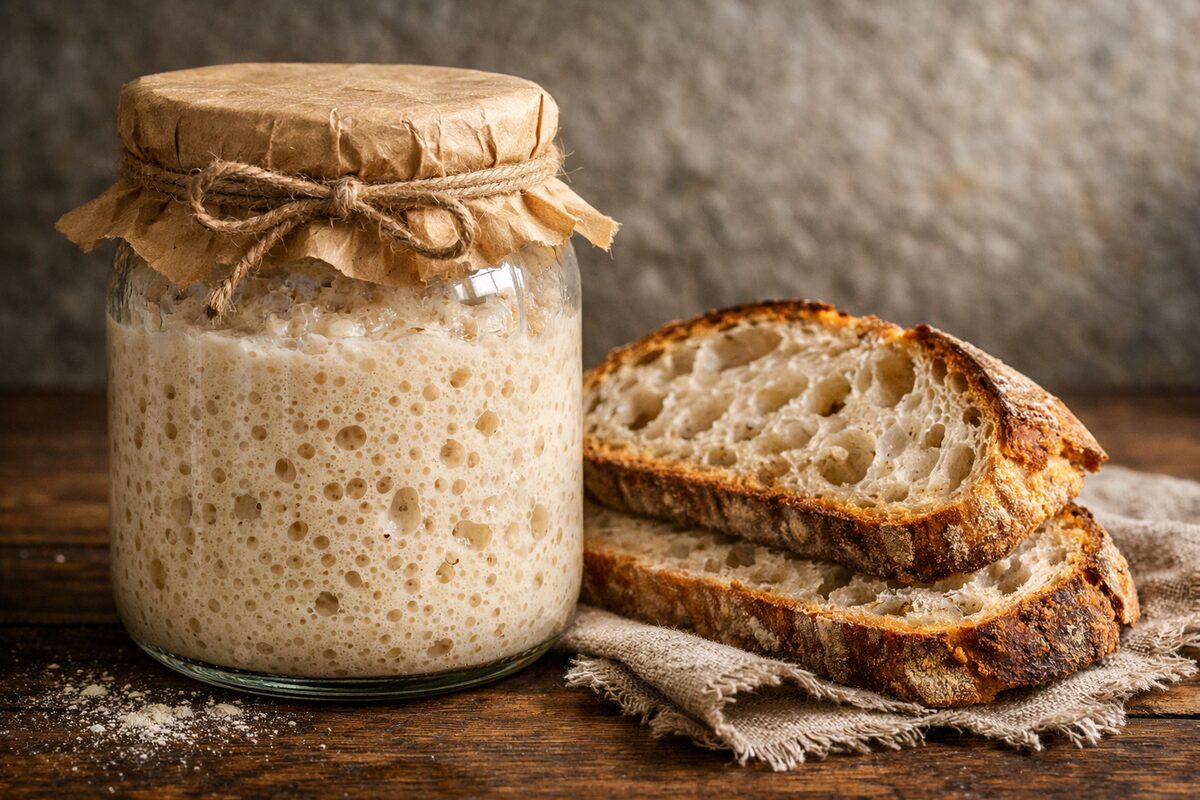
Sourdough has its own charm: some love it for its aroma, others for its crust that sings, and some claim to feel better after eating it. But what really happens inside the dough while it ferments?
A study published by ScienceDaily titled “Scientists discover what really happens during sourdough fermentation” explains that sourdough fermentation does not just make the dough rise: it significantly transforms some fibers in the wheat, especially arabinoxylans. And the most interesting part is how this transformation occurs: not only thanks to microbes but also (and mainly) due to enzymes already present in the wheat, which get “activated” when the environment becomes more acidic, as happens in sourdough.
Translated for those who knead at home: sourdough creates a context that restructures the fibers, and this can reflect on texture, perceived digestibility, and aromatic profile of the bread. Additionally, in pilot baking trials, flours enriched with arabinoxylans yielded breads with higher nutritional values and a wider range of flavors.
Let’s break it down in simple terms and, above all, with practical advice.
What the Study Discovered (In Simple Terms)
Here are the key points, free of unnecessary jargon:
- In sourdough, the dough becomes more acidic (due to lactic acid bacteria).
- This acidity activates enzymes already present in the flour.
- The enzymes break down and transform some of the wheat fibers (the arabinoxylans).
- This transformation may affect:
- the structure of the dough and bread (how it holds its shape, how the crumb turns out)
- the sensation of digestibility (how one feels afterwards)
- aromas and flavors (including buttery or slightly sweet notes related to some microbial species described in the study)
- In “serious” baking trials (not just in the lab), using flours enriched with arabinoxylans produced breads:
- more interesting in terms of nutrition
- richer in aromatic nuances
Arabinoxylans: The “Invisible” Fibers that Change Bread
Arabinoxylans (often abbreviated as AX) are a type of dietary fiber found in wheat. You can't see them or sense them “at a glance,” but they contribute to many important factors for home bakers: dough strength, softness of the crumb, and mouthfeel.
The study distinguishes two main “families”: