 Il Circolo del Forno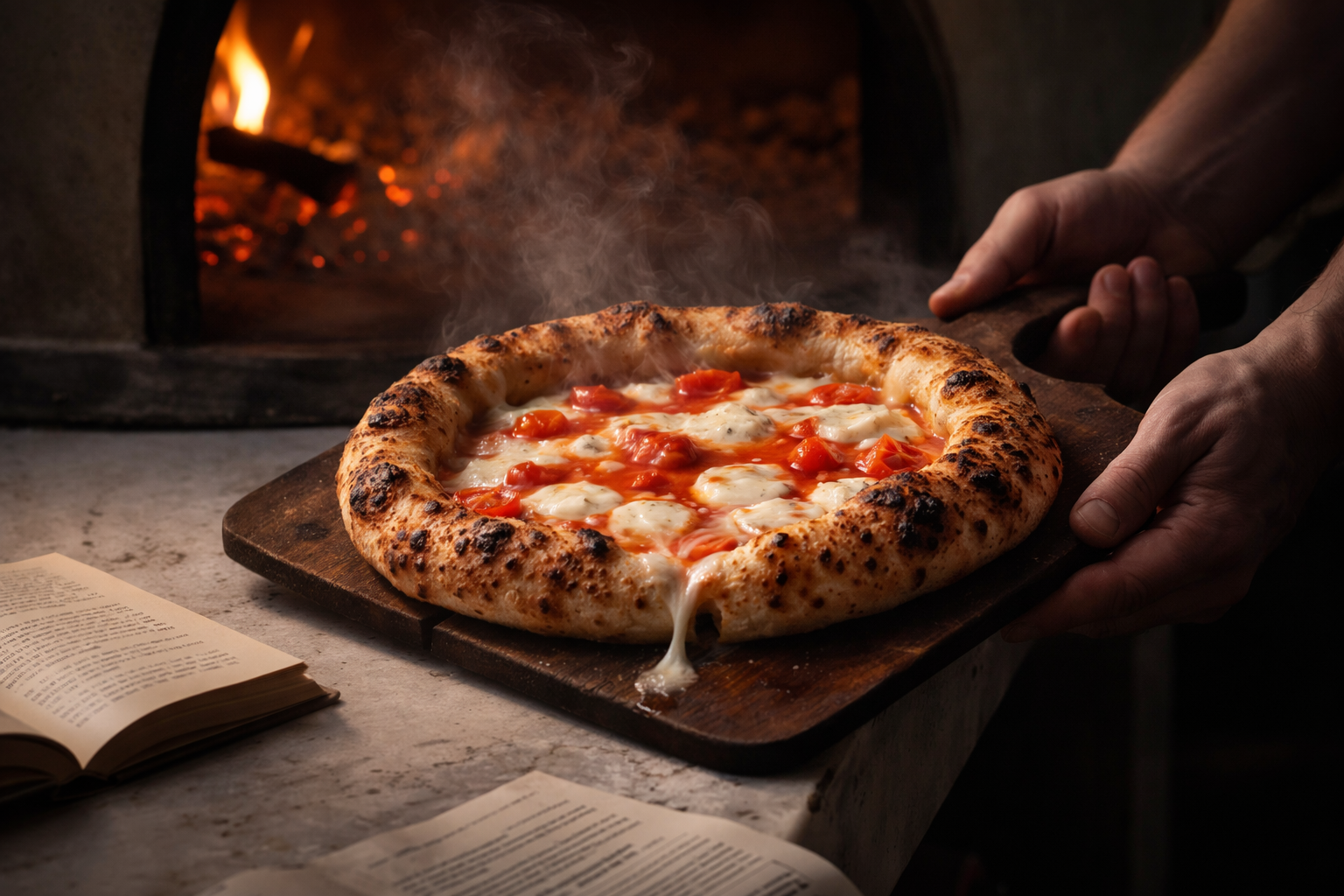
Welcome, dear friends, to this moment of pure magic. Rolling the dough is not a cold mechanical sequence but the most poetic and crucial moment of our effort. Here, the hours of waiting, the careful selection of flours, and the silent breathing of fermentation finally transform into a complete shape. Each disk of dough that is born under your fingers is a unique and unrepeatable work of art, capable of narrating the sensitivity and the touch of its maker. I invite you to forget the rush of everyday life and connect deeply with the dough. Feel its softness, listen to its elasticity, and let the material itself guide you. Tuning in with the dough means respecting the work of nature and time, transforming water and flour into a triumph of conviviality and tradition.
In this rite, there exists a dogma that admits no exceptions: the rolling pin is banned. This firmness does not arise from a nostalgic whim but from a fundamental technical necessity for the success of our masterpiece. During fermentation, microorganisms create precious gas bubbles that ensure lightness and flakiness. A cold automatic action like using a rolling pin would violently expel this vital breath, condemning the pizza to become a flat, lifeless disk. Instead, manipulation must occur exclusively with your fingers, as only the skilled pressure of the fingertips can gently move the air from the center to the edge. This movement pushes the gases towards the crust, which will swell during baking, giving life to the famous cornicione. Remember the balance of tradition: the center must be a thin veil of only 0.1 inch (2.5mm), while the edge should rise 0.4 to 0.8 inch (1 to 2cm). Avoid modern exaggerations, those excessive edges often called "canotti" that too frequently conceal a raw and indigestible interior.
The dance of the fingers begins the moment the dough is carefully extracted from the food storage box, which we call a "mattarella." The dough should feel smooth to the touch, pliable, and not sticky. Once placed on the work surface, you start with a consistent pressure of the fingertips, moving from the bottom to the top to give the first circular shape. Then you switch to the true Neapolitan rhythm: the slap. It's a coordinated dance of lifting, extending, and rotating that allows the disk to naturally widen without tearing. You will feel under your fingers a yielding texture, a sign of a well-relaxed dough that follows every gesture without resistance.
Managing the work surface requires precise measurements. Use very little flour, or better yet, a sprinkling of semolina to prevent the dough from sticking to the marble. An excess of white powder is the enemy of flavor: the flour that remains stuck to the bottom burns instantly when in contact with the surface of the oven.